Saudi
Saudi Dubai
Dubai Kuwait
 Toronto
 London, UK
 India
India
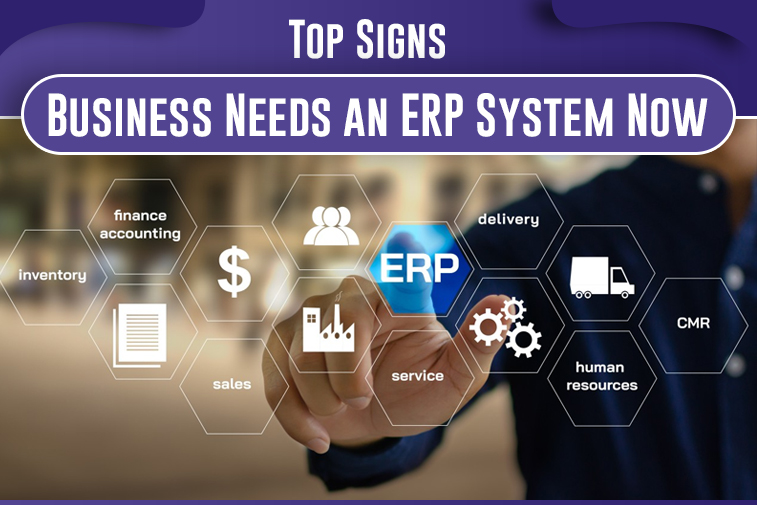
Top Signs Your Business Needs an ERP System Now
As businesses grow, managing operations using spreadsheets, disconnected software, or manual processes becomes increasingly difficult. What once worked for a small team can quickly turn into inefficiency, errors, and missed opportunities. This is where an ERP (Enterprise Resource Planning) system becomes not just useful—but necessary.
If you are unsure whether it’s the right time to invest in ERP, this guide highlights the key signs your business needs an ERP system now, explains when to implement ERP, and shows how the right solution can support sustainable growth.
What Is an ERP System (in Simple Terms)?
An ERP system is a centralized software platform that connects and manages core business processes such as:
- Finance and accounting
- Inventory and supply chain
- Sales and CRM
- Human resources
- Operations and reporting
Instead of working in silos, all departments operate from a single source of truth, improving visibility, efficiency, and decision-making.
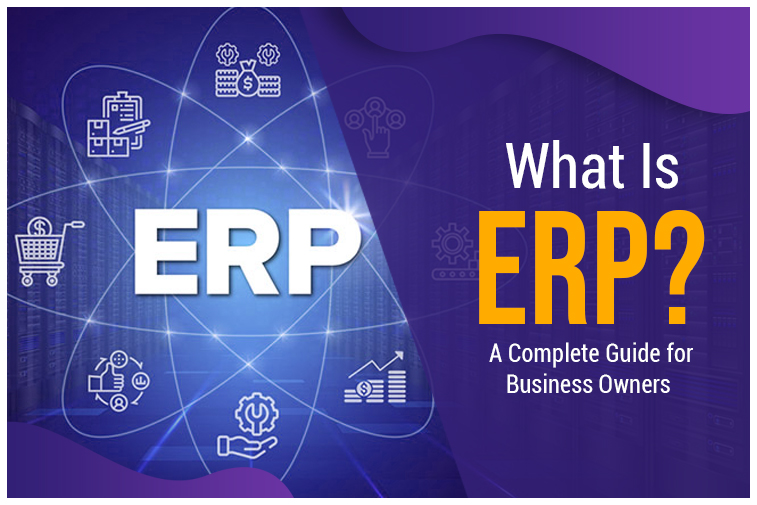
Also Read: What Is ERP? A Complete Guide for Business Owners
Why Businesses Delay ERP Adoption (and Why That’s Risky)
Many companies postpone ERP implementation because they believe it is:
- Only for large enterprises
- Too expensive
- Too complex
- Not urgent
In reality, delaying ERP often leads to higher long-term costs, operational inefficiencies, and limited scalability. Understanding the warning signs helps businesses adopt ERP at the right time—before growth becomes unmanageable.
1. Your Data Is Scattered Across Multiple Systems
One of the clearest signs your business needs an ERP system is when critical data lives in different tools that don’t communicate with each other.
Common symptoms:
- Finance uses accounting software
- Sales uses CRM
- Inventory is tracked in spreadsheets
- Reports are manually compiled
This fragmentation leads to errors, duplicated work, and inconsistent data.
How ERP helps:
ERP centralizes all business data, ensuring every department works with accurate, real-time information.
2. Manual Processes Are Slowing Down Growth
If your team spends excessive time on repetitive tasks such as data entry, approvals, or report generation, growth becomes difficult.
Warning signs include:
- Manual invoice processing
- Repeated data entry across systems
- Delayed approvals
- High dependency on individual employees
This is a strong indicator of when to implement ERP.
ERP advantage:
Automation reduces human error, saves time, and allows teams to focus on strategic work rather than administration.
3. You Lack Real-Time Visibility into Business Performance
Businesses often struggle to answer basic questions like:
- What is our current cash flow?
- Which products are most profitable?
- Where are operational bottlenecks?
If reporting is delayed or unreliable, decision-making becomes reactive instead of proactive.
ERP solution:
ERP systems provide real-time dashboards and reports, enabling leadership to make informed decisions quickly.
4. Your Business Is Growing, but Systems Are Not
Growth is positive—but unmanaged growth creates chaos.
Signs include:
- Increased order errors
- Inventory mismatches
- Missed deadlines
- Customer dissatisfaction
This is where business growth ERP solutions become essential.
ERP impact:
ERP systems scale with your business, supporting higher transaction volumes, new locations, and expanded teams without increasing complexity.
5. Customer Experience Is Suffering
Delayed responses, incorrect orders, or inconsistent communication often stem from disconnected systems.
Examples:
- Sales promises delivery dates operations can’t meet
- Customer support lacks order visibility
- Invoices don’t match delivered products
ERP benefit:
ERP aligns sales, operations, and support, resulting in faster responses, accurate fulfilment, and improved customer satisfaction.
6. Financial Control and Compliance Are Becoming Difficult
As businesses grow, managing finances manually increases risk.
Red flags:
- Delayed financial reporting
- Difficulty tracking expenses
- Compliance concerns
- Inaccurate forecasts
This is particularly relevant for ERP system benefits for small business, where financial clarity is critical.
ERP advantage:
ERP strengthens financial control, improves audit readiness, and ensures compliance with regulatory requirements.
7. You Are Planning Expansion or Digital Transformation
If your business is preparing for:
- Market expansion
- New product lines
- Multi-location operations
- Digital transformation initiatives
Then ERP implementation for companies should be part of that roadmap.
ERP acts as the digital backbone that supports expansion without operational breakdown.
When Is the Right Time to Implement ERP?
There is no single “perfect” time, but ERP implementation should be considered when:
- Growth is outpacing current systems
- Errors and inefficiencies are increasing
- Decision-making lacks reliable data
- Customer satisfaction is declining
- Manual work is affecting productivity
Early implementation often results in smoother transitions and better ROI.
How Sapphire Technologies Helps Businesses Implement ERP Successfully
Sapphire Technologies supports businesses at every stage of their ERP journey with a practical, business-first approach.
Our ERP approach includes:
- Understanding your business processes before recommending solutions
- Custom ERP development or integration based on actual needs
- Scalable architecture designed for future growth
- Secure data handling and system reliability
- Ongoing support, optimisation, and training
Rather than forcing generic software, we design ERP solutions that fit your workflows, industry, and growth plans.
FAQs: ERP Systems for Growing Businesses
What are the main signs your business needs an ERP system?
Disjointed systems, manual processes, lack of visibility, growth challenges, and financial inefficiencies are key indicators.
Is ERP only for large enterprises?
No. Many modern ERP systems are designed specifically for small and mid-sized businesses.
When should a small business implement ERP?
When manual processes begin limiting efficiency, accuracy, or growth potential.
How long does ERP implementation take?
Implementation timelines vary depending on complexity, but many projects range from a few months to phased rollouts.
Can ERP integrate with existing software?
Yes. ERP systems can be integrated with CRM, accounting tools, eCommerce platforms, and other business software.
What is the biggest benefit of ERP for growing businesses?
Centralized control, automation, and real-time insights that support smarter decisions and scalable growth.
Final Thoughts
Ignoring the signs your business needs an ERP system can lead to inefficiency, lost revenue, and operational stress. ERP is no longer just an enterprise tool—it’s a strategic necessity for businesses that want to grow sustainably.
With the right approach and the right technology partner, ERP becomes an enabler of efficiency, clarity, and long-term success. Sapphire Technologies helps businesses implement ERP systems that align with real-world needs—today and in the future. Contact Sapphire Technologies Now!