Saudi
Saudi Dubai
Dubai Kuwait
 Toronto
 London, UK
 India
India
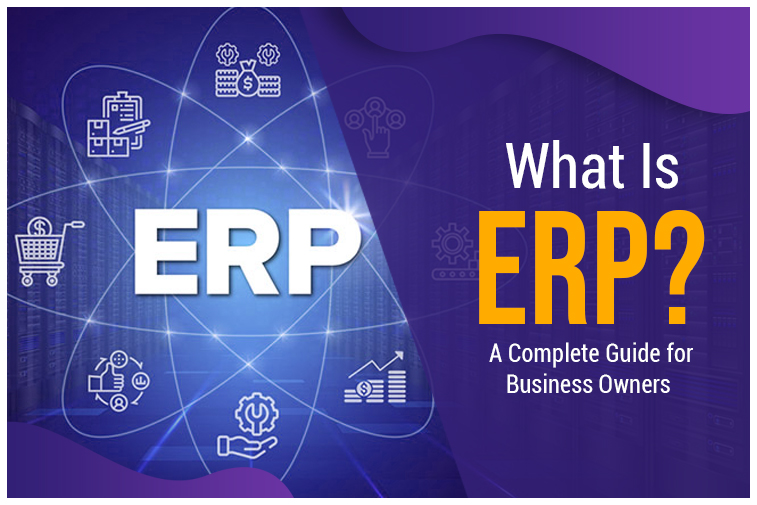
What Is ERP? A Complete Guide for Business Owners
Running a business in today’s fast-paced environment requires more than traditional methods, spreadsheets, or disconnected tools. As operations expand, it becomes increasingly difficult to manage finance, inventory, sales, HR, procurement, and customer operations separately. This is where ERP (Enterprise Resource Planning) becomes a powerful solution.
ERP systems bring all business processes into one integrated platform, improving efficiency, accuracy, and visibility across departments. For many organisations, an ERP is not just a software upgrade—it is a foundational step toward digital transformation.
In this comprehensive guide, we will break down what ERP really is, how it works, why modern businesses need it, and how a technology partner like Sapphire Technologies helps organisations adopt scalable, future-ready ERP systems.
1. What Is ERP? A Simple Definition
ERP (Enterprise Resource Planning) is a unified system that manages all core business operations from a single platform. Instead of using separate tools for finance, HR, inventory, sales, or customer support, ERP centralises everything.
It acts as the “brain” of your organisation—connecting data, automating processes, and ensuring that every department operates with real-time information.
In other words:
ERP helps businesses work faster, smarter, and more efficiently by bringing all operations under one digital system.
2. How ERP Works: The Core Idea
Think of ERP as the central highway that connects all parts of your business.
When one department updates data, the information becomes instantly available across the organisation.
For example:
- A sales order automatically updates inventory
- Inventory levels inform purchasing
- Purchasing updates finance
- Delivery details sync with customer service
This flow eliminates manual errors, reduces delays, and improves productivity.
3. Key Features of a Modern ERP System
Today’s ERP platforms offer powerful features that go far beyond traditional accounting systems. Here are the capabilities business owners value most:
a. Financial Management
- Automated invoicing and billing
- Real-time P&L, cash flow, and expense tracking
- Budgeting and forecasting
- Compliance and audit-friendly reporting
b. Inventory & Supply Chain Management
- Stock tracking across warehouses
- Purchase order automation
- Vendor management
- Demand forecasting
- Delivery and logistics tracking
c. Sales & CRM Integration
- Lead and pipeline management
- Customer communication history
- Quotation and order management
- Automated follow-ups
d. Human Resources & Payroll
- Attendance and leave management
- Payroll automation
- Employee performance tracking
e. Manufacturing & Production (if relevant)
- Material planning (MRP)
- Production scheduling
- Quality control
f. Business Intelligence & Reports
- Dashboard analytics
- Performance metrics
- Predictive insights
4. Types of ERP Systems
Different businesses require different ERP models:
1. On-Premise ERP
Installed on company-owned servers.
Best for industries needing strict data control.
2. Cloud ERP
Hosted online—accessible anywhere, anytime.
Most popular for SMEs due to low cost and scalability.
3. Hybrid ERP
A mix of cloud + on-premise for flexibility.
4. Industry-Specific ERP
Tailored systems for retail, construction, manufacturing, healthcare, hospitality, etc.
Sapphire Technologies builds ERP solutions customised to the unique workflow of each industry, ensuring every module aligns with exact operational needs.
5. Who Needs ERP? (And When)
Many business owners assume ERP is only for large enterprises.
In reality, growing SMEs often benefit the most.
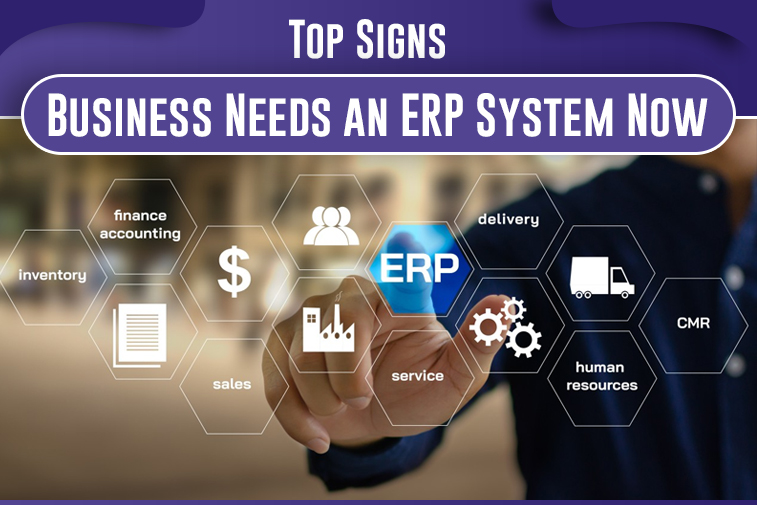
Signs your business is ready for ERP:
- You’re managing operations using multiple disconnected software
- Teams repeatedly enter the same data into different systems
- There is no unified, real-time dashboard
- Inventory problems cause delays or stock-outs
- Reporting takes too long or depends heavily on manual work
- Customer experience suffers due to slow information flow
- You want to scale but your current system cannot support it
If two or more of these symptoms match your situation, ERP can transform your operations.
6. Benefits of ERP for Business Owners
ERP systems offer measurable benefits across the organisation. Below are the most significant advantages:
1. Improved Efficiency
ERP automates repetitive tasks, reducing manual work and freeing teams to focus on strategic activities.
Workflows become faster and more predictable.
2. Reduced Operational Costs
By centralising processes, businesses cut spending on:
- Multiple tools and licenses
- IT maintenance
- Manual labor hours
- Inventory losses
ERP reduces waste and ensures cost-effective operations.
3. Better Decision-Making with Real-Time Data
ERP provides instant insights, dashboards, and performance analytics.
Business owners can make informed decisions without waiting for reports or guesswork.
4. Enhanced Customer Experience
Fast order processing, accurate delivery schedules, and quick response times improve customer satisfaction—directly impacting brand loyalty.
5. Scalable Business Growth
ERP adapts as your business expands:
- Add new branches
- Integrate additional modules
- Scale operations without disrupting workflows
A modern ERP ensures you’re ready for long-term growth.
6. Stronger Data Security
Centralised systems reduce the risk of data leaks, human errors, and outdated records.
Cloud-based ERPs offer encryption, role-based access, and regular backups.
7. Challenges Businesses Face Without ERP
Understanding the alternative helps clarify ERP’s value.
Businesses without ERP often experience:
- Data scattered across different tools
- Poor communication between departments
- Delayed order processing
- Unreliable financial reports
- Inventory mismatches
- Slow decision-making
- High operational inefficiencies
- Customer dissatisfaction
ERP eliminates these issues by creating an organised, centralised system.
8. How Sapphire Technologies Helps You Implement ERP Successfully
Many businesses hesitate to adopt ERP due to complexity.
This is where Sapphire Technologies stands apart.
We help streamline the entire journey—from planning to deployment and long-term support.
a. Customised ERP Development
Instead of “one-size-fits-all”, our team builds ERP solutions tailored to your business model, industry, and goals.
b. Process Mapping & Optimisation
We analyse your current workflows and design a system that improves speed, accuracy, and efficiency.
c. Smooth Data Migration
Old records are safely transferred without loss or disruption.
d. User Training & Onboarding
We ensure your team understands how to fully utilise the system.
e. Continuous Support & Updates (H3)
We provide maintenance, upgrades, and troubleshooting whenever needed.
f. Integration with Other Platforms
Our ERP systems integrate seamlessly with:
- CRM
- Accounting systems
- eCommerce platforms
- Inventory software
- HR tools
With Sapphire Technologies, ERP becomes a strategic investment—not a technical challenge.
9. How to Choose the Right ERP for Your Business
Before committing to ERP, evaluate these factors:
- Business size and growth plan
- Industry-specific needs
- Customization requirements
- Cloud vs on-premise preference
- Integration needs
- Budget and long-term ROI
- User-friendliness and support
Sapphire Technologies guides you based on these considerations to ensure you get the right fit.
10. Final Thoughts: ERP Is the Backbone of a Modern Business
ERP is no longer a luxury—it is a necessity for businesses seeking efficiency, clarity, and growth.
With the right system, you gain full control of operations, eliminate errors, enhance customer service, and build a scalable future-ready organisation.
Partnering with Sapphire Technologies ensures your ERP implementation is smooth, customised, and aligned with your business goals.
If you're looking to transform your business with modern ERP solutions, Sapphire Technologies is here to help bring your vision to life.
Contact us for ERP or Other Software Solution
ERP FAQs
1. Is ERP suitable for small businesses?
Yes. SMEs benefit greatly from ERP as it improves control, reduces costs, and supports growth at early stages.
2. How long does it take to implement ERP?
Implementation depends on project size. Small systems may take weeks; larger, customised systems may take months.
3. Do I need technical knowledge to use ERP?
No. Modern ERP systems are user-friendly and intuitive. Sapphire Technologies also provides full training.
4. What is the cost of implementing ERP?
Costs vary based on features, modules, and customization. Cloud ERP is generally more cost-effective for SMEs.
5. Can ERP integrate with my existing tools?
Yes. We integrate ERP with CRMs, accounting tools, HR systems, eCommerce platforms, and more.
6. What industries benefit most from ERP?
Retail, construction, logistics, manufacturing, hospitality, healthcare, education, and service-based businesses benefit significantly.
7. How does ERP improve customer experience?
By speeding up operations, ensuring accurate inventory, improving communication, and offering faster service.
8. Is cloud ERP secure?
Absolutely. Cloud ERP uses encryption, backups, and role-based access to protect sensitive data.
9. What makes Sapphire Technologies different from others?
We provide fully customised ERP solutions tailored to your workflows—not generic templates.
10. Can ERP help me scale my business internationally?
Yes. ERP centralises data, supports multi-location operations, and ensures consistency across branches.