Saudi
Saudi Dubai
Dubai Kuwait
 Toronto
 London, UK
 India
India
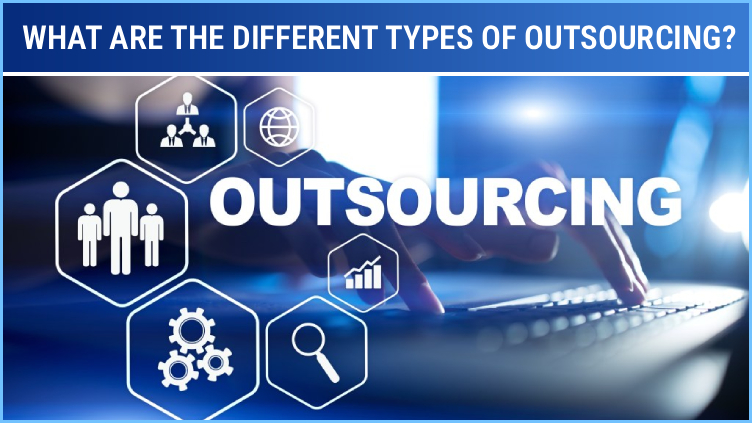
What Are the Different Types of Outsourcing?
Outsourcing means hiring an external company, specialist, or team to handle work that could otherwise be performed internally.
Businesses outsource for many different reasons. Some want access to specialist talent. Others need to reduce operational workload, speed up delivery, improve technology capabilities, or scale without building a large internal team.
The important point is that outsourcing is not one single model.
There are different types of outsourcing based on the function being outsourced, the location of the provider, and the way the relationship is structured.
For example, a company could outsource software development to an offshore development team, use a dedicated team for a long-term product, or hire a managed service provider to continuously manage its IT infrastructure.
Understanding these differences helps businesses select an outsourcing model that matches their goals, budget, timeline, and level of control.
Types of Outsourcing by Business Function
One of the easiest ways to understand outsourcing is to look at what work is being outsourced.
1. IT Outsourcing
IT outsourcing involves hiring an external technology company to manage some or all IT-related activities.
Common examples include:
- Software development
- Web development
- Mobile app development
- Cloud management
- Cybersecurity
- Technical support
- Application maintenance
- Data management
- IT infrastructure
IT outsourcing is particularly useful when a company needs technical expertise without building a large internal technology department.
For example, a growing retailer may outsource the development of its e-commerce application instead of hiring an entire team of developers, designers, testers, and project managers.
2. Software Development Outsourcing
Software development outsourcing is a specialised form of IT outsourcing focused on building and maintaining digital products.
A business may outsource:
- Custom software development
- SaaS development
- ERP development
- CRM development
- Mobile applications
- Business portals
- API integrations
- AI-powered applications
This model gives companies access to developers and technical specialists without having to recruit every role internally.
Also read: Software Outsourcing Mistakes
3. Business Process Outsourcing (BPO)
Business Process Outsourcing, or BPO, means transferring specific recurring business processes to an external provider.
Examples include:
- Customer support
- Data entry
- Accounting
- Payroll processing
- Order processing
- Back-office operations
- Lead management
BPO is often used when a process is important to the business but doesn't need to remain completely in-house.
The goal can be to improve efficiency, reduce repetitive workloads, or gain access to specialised operational teams.
4. Professional Outsourcing
Professional outsourcing involves hiring external specialists for expertise that may not be available internally.
Examples include:
- Legal services
- Accounting
- Engineering
- Consulting
- Design
- Market research
- Financial analysis
This model can be valuable when a business needs specialist expertise without creating a permanent internal department.
5. Project Outsourcing
In project outsourcing, an external provider is responsible for delivering a defined project.
The project generally has:
- A specific objective
- Defined deliverables
- A timeline
- A budget
- Agreed responsibilities
Examples include building a business website, developing a mobile application, migrating data, conducting a cybersecurity audit, or creating an ERP system.
This is a good option when you need a particular result rather than a permanent external team.
6. Manufacturing Outsourcing
Manufacturing outsourcing involves using an external manufacturer to produce components or finished products.
Businesses can outsource:
- Product manufacturing
- Assembly
- Packaging
- Quality control
- Production-related logistics
This allows companies to access established production facilities and expertise without making the entire capital investment themselves.
7. Knowledge Process Outsourcing (KPO)
Knowledge Process Outsourcing goes beyond routine business processes.
KPO typically involves work requiring specialised knowledge, analytical ability, or professional judgement.
Examples include:
- Data analysis
- Business research
- Financial modelling
- Engineering analysis
- Market intelligence
- Product research
KPO is particularly useful when the business requires expertise rather than simply additional manpower.
8. Recruitment Process Outsourcing (RPO)
Recruitment Process Outsourcing involves outsourcing some or all recruitment activities to an external specialist.
This can include:
- Candidate sourcing
- Screening
- Interview coordination
- Recruitment administration
- Hiring analytics
RPO can help growing businesses manage hiring volume without building a large internal recruitment function.
9. Legal Process Outsourcing (LPO)
Legal Process Outsourcing involves delegating specific legal or legal-support activities to an external provider.
Typical work may include:
- Legal research
- Document review
- Contract support
- Due diligence
- Intellectual property documentation
Businesses may use LPO to handle large volumes of legal-support work while allowing internal legal teams to focus on strategic matters.
Types of Outsourcing Based on Location
The location of your outsourcing partner creates another major category of outsourcing models.
The reference article also organizes outsourcing through location, including offshore, nearshore, onshore, and onsite models.
10. Offshore Outsourcing
Offshore outsourcing means working with a provider located in another country or distant market.
For example, a company in the UK may outsource software development to a technology company in India.
Benefits
- Access to larger talent pools
- Potential cost advantages
- Access to specialised expertise
- Extended working hours across time zones
Challenges
- Time-zone differences
- Communication gaps
- Cultural differences
- Data and compliance considerations
11. Nearshore Outsourcing
Nearshore outsourcing means working with a provider in a nearby country or region.
The goal is often to achieve a balance between cost, talent access, communication, and time-zone compatibility.
Best suited for:
- Long-term development
- Collaborative projects
- Frequent meetings
- Businesses that want geographic proximity
12. Onshore Outsourcing
Onshore outsourcing involves hiring an external provider within the same country.
The provider and client therefore operate within the same national market.
Advantages
- Similar business environment
- Easier communication
- Minimal time-zone challenges
- Potentially easier regulatory coordination
The trade-off is that onshore outsourcing may be more expensive than some international alternatives.
13. Onsite Outsourcing
In onsite outsourcing, external professionals work at the client's physical location.
This model can be useful when:
- Physical collaboration is important
- The work involves specialised infrastructure
- Immediate communication is required
- Teams need to work closely together
Onsite outsourcing can also overlap with staff augmentation, depending on the engagement structure.
Types of Outsourcing Models Based on Engagement
Location and function aren't the only ways to classify outsourcing.
The commercial and operational relationship between the client and provider also matters.
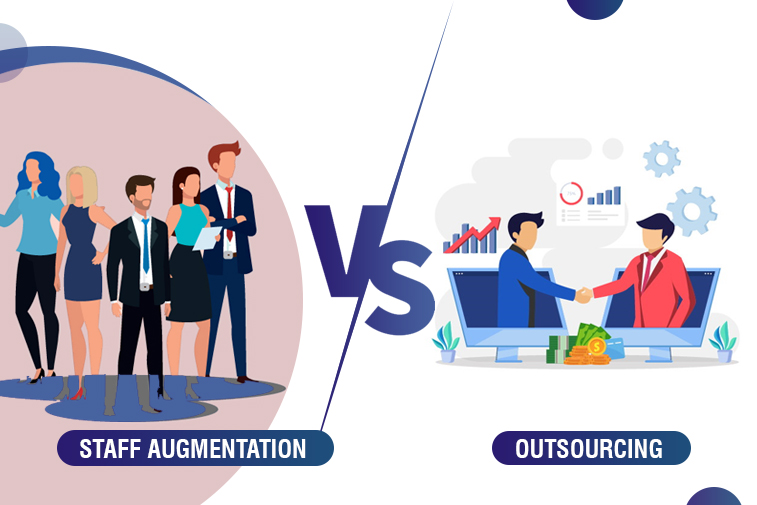
14. Staff Augmentation
With a staff augmentation model, external professionals join or complement your existing team.
For example, a company may have an internal product manager and designers but temporarily need:
- 2 developers
- 1 QA engineer
- 1 DevOps specialist
Instead of recruiting permanent employees, it can use external talent for the required period.
Best for:
- Skill gaps
- Short-term hiring needs
- Flexible team expansion
- Projects with changing resource requirements
15. Dedicated Development Team
A dedicated team is a long-term external team assigned to a specific client or product.
The team may include:
- Developers
- UI/UX designers
- QA engineers
- Project managers
- DevOps engineers
- Business analysts
This model is particularly suitable for startups and businesses building products over an extended period.
16. Managed Services Model
In a managed services model, the external provider takes ongoing responsibility for a particular function or service.
Examples include:
- Managed IT
- Cloud infrastructure
- Cybersecurity
- Application support
- Network management
Instead of simply providing people, the outsourcing partner is responsible for maintaining agreed service levels and outcomes.
This distinction makes managed services different from basic staff augmentation.
17. Build-Operate-Transfer (BOT)
The Build-Operate-Transfer model is designed for businesses that eventually want to bring an external operation in-house.
The provider initially:
- Builds the team or operation.
- Manages it for an agreed period.
- Helps establish processes and infrastructure.
- Transfers the operation to the client.
BOT can be useful when a company wants to build an internal capability but doesn't want to start from zero.
Outsourcing Models: Which One Should You Choose?
There is no universal “best” outsourcing model.
The right choice depends on what your business needs.
|
Business Need |
Suitable Model |
|
Need a complete software product |
Project Outsourcing |
|
Need additional developers |
Staff Augmentation |
|
Need a long-term product team |
Dedicated Team |
|
Need ongoing IT management |
Managed Services |
|
Need a one-time specialist |
Professional Outsourcing |
|
Need recurring operational support |
BPO |
|
Need lower-cost global talent |
Offshore Outsourcing |
|
Need geographic proximity |
Nearshore Outsourcing |
|
Need same-country support |
Onshore Outsourcing |
|
Want to eventually build an internal team |
BOT |
How to Choose the Right Outsourcing Partner
Selecting an outsourcing model is only half the decision.
The outsourcing partner you choose can have an even greater impact on the outcome.
Before signing a contract, consider:
1. Technical Expertise
Does the provider have experience with your technology stack and business requirements?
2. Relevant Portfolio
Look for projects similar to what you are planning to build.
3. Communication
Understand how meetings, progress updates, approvals, and issue escalation will work.
4. Security
Ask about data protection, access controls, infrastructure security, and development practices.
5. Scalability
Can the partner increase or reduce resources as your requirements change?
6. Contract Structure
Clarify pricing, ownership, timelines, deliverables, support, confidentiality, and termination conditions.
7. Long-Term Fit
A good outsourcing partner should be capable of growing with your business rather than simply completing one task.
Successful outsourcing requires planning, careful partner selection, clear agreements, and ongoing performance management.
How Much Does Outsourcing Cost?
There is no fixed outsourcing price.
The cost of outsourcing depends on:
- Type of service
- Number of professionals
- Skill level
- Project complexity
- Location
- Engagement duration
- Technology stack
- Support requirements
A project-based contract may have a fixed price, while staff augmentation may be priced monthly or hourly. Managed services are typically structured around recurring service agreements.
Therefore, businesses should compare total value and total cost of ownership, rather than choosing a provider based only on the lowest quote.
Advantages of Outsourcing
A well-designed outsourcing strategy can help businesses:
Reduce Operational Pressure
External teams can take responsibility for tasks that would otherwise consume internal resources.
Access Specialised Talent
Businesses can access skills that may be difficult or expensive to recruit internally.
Scale Faster
Companies can add expertise when demand increases without permanently expanding headcount.
Improve Delivery Speed
Experienced teams can often begin work faster than building an internal function from scratch.
Focus on Core Activities
Outsourcing non-core work allows internal teams to spend more time on strategic priorities.
Risks and Challenges of Outsourcing
Outsourcing also has potential risks.
Businesses should plan for:
- Communication problems
- Quality issues
- Vendor dependency
- Security risks
- Unexpected costs
- Scope changes
- Cultural differences
- Knowledge transfer challenges
These risks don't mean outsourcing is a poor choice. They mean the engagement needs clear expectations, measurable KPIs, strong contracts, and regular communication.
How Sapphire Technologies Approaches Outsourcing
At Sapphire Technologies, we help businesses choose technology outsourcing models based on their actual requirements rather than forcing every project into the same approach.
Our technology services include:
- Custom Software Development
- Web Development
- Mobile App Development
- AI/ML Development
- ERP Solutions
- CRM Solutions
- Warehouse Management Systems
- Business Intelligence
- Digital Marketing
Whether a business needs a complete development team, a specific software project, additional technical resources, or a long-term technology partner, the engagement can be structured around its goals, timeline, and budget.
Final Thoughts
The different types of outsourcing give businesses far more flexibility than simply hiring an external company.
You can choose outsourcing based on what you need, where your partner is located, and how you want the relationship to work.
That means a company might use project outsourcing for a new website, staff augmentation for additional developers, managed services for ongoing infrastructure, and offshore outsourcing for access to a global talent pool.
The most effective outsourcing strategy isn't necessarily the cheapest one.
It's the model that gives your business the right combination of talent, control, flexibility, technology, speed, and long-term value.
Before choosing a provider, define what you want to outsource, determine how much control you need, establish measurable outcomes, and select a partner with relevant expertise.
Frequently Asked Questions
What are the different types of outsourcing?
The different types of outsourcing can be classified by function, location, and engagement model. Common examples include IT outsourcing, BPO, project outsourcing, professional outsourcing, offshore outsourcing, nearshore outsourcing, onshore outsourcing, staff augmentation, dedicated teams, and managed services.
What are the main types of outsourcing models?
The main outsourcing models include project-based outsourcing, staff augmentation, dedicated development teams, managed services, and Build-Operate-Transfer. Businesses can also combine these models with offshore, nearshore, or onshore delivery.
What are the four types of outsourcing based on location?
The four common location-based models are offshore, nearshore, onshore, and onsite outsourcing. The key difference is where the outsourced team or provider operates relative to the client.
What is IT outsourcing?
IT outsourcing involves hiring an external technology provider to handle functions such as software development, application maintenance, cloud infrastructure, cybersecurity, technical support, or data management.
What is the difference between outsourcing and staff augmentation?
Outsourcing generally means transferring responsibility for a service, project, or process to an external provider. Staff augmentation adds external professionals to an existing internal team while the client usually retains greater day-to-day management control.
What is offshore outsourcing?
Offshore outsourcing involves hiring a provider in a different and usually distant country. Businesses often use it to access global talent, specialised expertise, or different cost structures.
What is nearshore outsourcing?
Nearshore outsourcing means working with an external provider in a geographically nearby country or region. It can provide a balance between talent access, communication, time-zone compatibility, and cost.
Which outsourcing model is best for software development?
The best model depends on the project. Project outsourcing works well for clearly defined products with specific deliverables, dedicated teams suit long-term development, and staff augmentation is useful when an existing team needs additional skills or capacity.
Is outsourcing cheaper than hiring in-house?
Not necessarily in every situation. Outsourcing can reduce recruitment, infrastructure, and operational costs, but pricing depends on the service, location, expertise, duration, and engagement model. The right comparison is total business value rather than hourly or monthly cost alone.
How do I choose an outsourcing company?
Evaluate technical expertise, relevant experience, portfolio, communication, security practices, scalability, pricing transparency, contract terms, and client references. A strong outsourcing partner should be able to adapt as your business requirements evolve.