Saudi
Saudi Dubai
Dubai Kuwait
 Toronto
 London, UK
 India
India
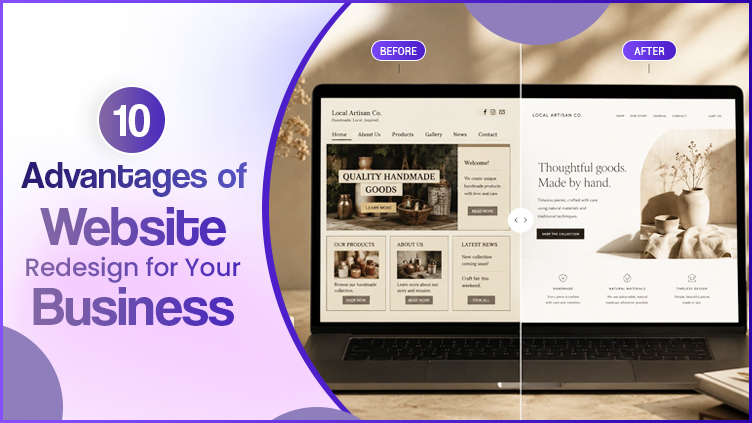
10 Advantages of Website Redesign for Your Business
Your website is often the first place potential customers interact with your business. If it looks outdated, loads slowly, works poorly on mobile devices, or makes information difficult to find, visitors may leave before they understand what you offer.
This is why a website redesign is more than a visual makeover.
A well-planned redesign can improve your user experience, search visibility, website performance, brand credibility, security, and conversions.
Understanding the advantages of website redesign can help you decide whether your current website is still supporting your business goals or holding your growth back.
In this article, we explore 10 key website redesign advantages and explain how a modern website can create more value for your business.
What Is a Website Redesign?
A website redesign involves improving an existing website's design, structure, content, functionality, performance, and user experience.
It doesn't always mean completely rebuilding the website from scratch.
Depending on the business, a redesign may involve:
- Updating the visual design
- Improving website navigation
- Reorganising content
- Making pages mobile-friendly
- Improving page speed
- Fixing technical issues
- Improving calls-to-action
- Updating branding
- Strengthening SEO
- Improving security
- Adding new functionality
The right approach depends on what your current website is missing.
Also Read: How to Redesign Your Website Without Losing SEO Traffic
10 Advantages of Website Redesign
1. Improve User Experience
One of the biggest advantages of website redesign is a better user experience (UX).
Visitors should be able to find what they need without confusion.
A redesign can improve:
- Navigation
- Page structure
- Readability
- Search functionality
- Content organisation
- Calls-to-action
- Overall usability
When users can move through your website easily, they are more likely to stay longer and take the next step.
Example
Instead of making visitors search through several pages for your services, a redesigned website can place important information in clear sections with simple navigation.
2. Make Your Website Mobile-Friendly
A large percentage of website visitors use smartphones and tablets.
A website that looks good on desktop but is difficult to use on mobile can create a poor customer experience.
A mobile-friendly website should:
- Adapt to different screen sizes
- Use readable text
- Have easy-to-tap buttons
- Load efficiently
- Avoid unnecessary scrolling
- Keep navigation simple
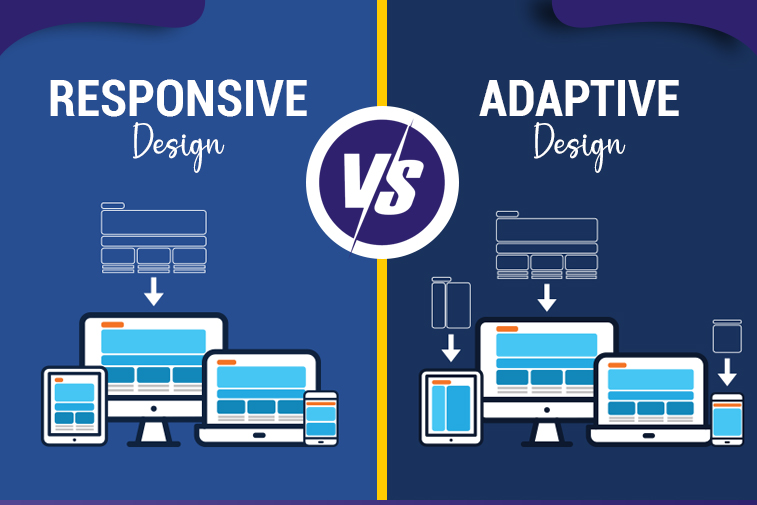
Responsive design can help your website provide a consistent experience across devices.
3. Improve SEO Performance
A redesign can create an opportunity to improve your website's search engine optimisation (SEO).
A modern business website can be structured around:
- Search intent
- Keyword targeting
- Clear headings
- Internal linking
- Crawlable page structures
- Descriptive URLs
- Optimised images
- Helpful content
A redesign can also help identify technical SEO problems that may have developed over time.
However, SEO should be planned carefully during a redesign. Poor implementation can cause rankings and traffic to drop.
4. Increase Website Speed and Performance
Slow websites can frustrate visitors and make it harder for them to complete actions.
Website performance can be affected by:
- Large images
- Outdated code
- Excessive scripts
- Poor hosting
- Unnecessary plugins
- Unoptimised media
During a redesign, developers can review these elements and build a more efficient website.
Better performance can contribute to a smoother user experience and stronger conversion opportunities.
5. Strengthen Your Brand Image
Your website should reflect how you want customers to perceive your business.
An outdated website may make an otherwise professional company appear less established.
A modern website redesign can help create a more consistent brand experience through:
- Updated colours
- Better typography
- Professional imagery
- Consistent messaging
- Stronger visual hierarchy
- Clear brand positioning
A professional digital presence can also help build trust with potential customers.
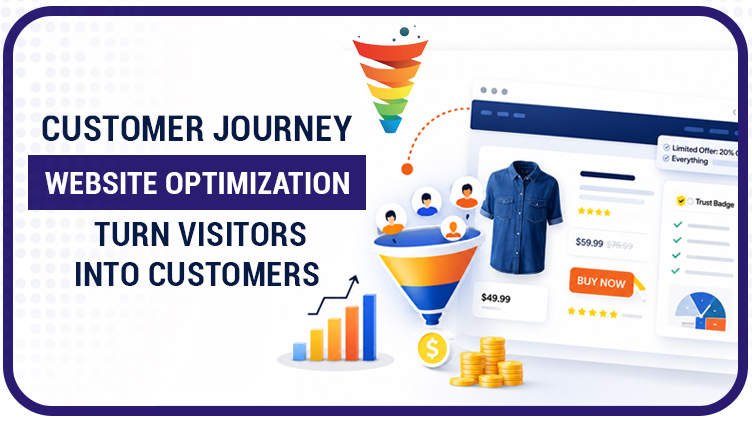
6. Improve Conversion Rates
A website should not only attract visitors. It should help move them towards an action.
This could be:
- Requesting a quote
- Calling your business
- Booking an appointment
- Filling out a form
- Buying a product
- Signing up
- Contacting your sales team
A redesign can improve conversion opportunities by using clearer:
Headlines → Benefits → Proof → CTA
For example, instead of a vague button such as “Learn More,” a service page might use a more action-oriented CTA such as “Request a Free Consultation.”
7. Make Content Easier to Find
As businesses grow, websites often accumulate outdated or duplicated content.
Important information can become buried.
A redesign gives you an opportunity to review your content architecture and organise pages into logical sections.
You can:
- Remove obsolete pages
- Consolidate duplicate content
- Improve menus
- Create clear service categories
- Strengthen internal links
- Add useful FAQs
Better content organisation benefits both users and search engines.
8. Improve Website Security
Older websites may rely on outdated software, plugins, frameworks, or security practices.
A redesign can provide an opportunity to review:
- CMS versions
- Plugins and dependencies
- User permissions
- Authentication
- Hosting configuration
- SSL implementation
- Security monitoring
- Backup processes
Security should be treated as an ongoing responsibility rather than a one-time redesign feature.
A modern website should be built with security in mind from the beginning.
9. Support Business Growth
Your website needs to support your current business—but it should also be flexible enough for future changes.
A redesign can make it easier to add:
- New services
- New products
- Landing pages
- Blog categories
- Customer portals
- Payment options
- CRM integrations
- Marketing tools
- Analytics
- Automation
A scalable website can reduce the need for major redevelopment every time your business changes.
10. Gain Better Data and Insights
A redesigned website can be connected to modern analytics and marketing tools.
This can help businesses understand:
- Which pages attract visitors
- Where visitors come from
- Which pages generate leads
- Where users leave
- Which calls-to-action perform best
- Which devices customers use
These insights allow businesses to make decisions based on actual user behaviour rather than assumptions.
Signs Your Business May Need a Website Redesign
Not every website needs to be redesigned immediately.
However, consider a redesign if:
- Your website looks outdated
- It performs poorly on mobile
- Pages load slowly
- Visitors struggle to find information
- Your branding has changed
- Your conversion rate is poor
- Your content structure is confusing
- Your website is difficult to update
- Your technology is outdated
- Your competitors offer a significantly better online experience
A redesign should solve a business problem—not simply follow a design trend.
Website Redesign vs Website Refresh
These terms are sometimes used interchangeably, but they can mean different things.
Website Refresh
A refresh usually involves smaller improvements such as:
- Updated colours
- New images
- Minor layout changes
- Content updates
- Small UX improvements
Website Redesign
A redesign is more comprehensive and may involve:
- New site architecture
- New layouts
- UX improvements
- Technical changes
- SEO restructuring
- New functionality
- Performance optimisation
- CMS or technology changes
The right option depends on how significant your current website problems are.
How to Plan a Successful Website Redesign
Before starting, define what you want the new website to achieve.
Ask:
What isn't working today?
Identify problems with UX, SEO, speed, content, conversions, or technology.
Who is the website for?
Understand your target customers and their needs.
What actions do you want visitors to take?
Define the key conversion goals.
What pages are important?
Protect valuable content and traffic during the redesign.
What should improve?
Set measurable goals for performance, leads, engagement, and usability.
A redesign should be driven by business objectives and customer needs, not just appearance.
How Sapphire Technologies Can Help
At Sapphire Technologies, we create modern, business-focused websites designed around usability, performance, search visibility, and growth.
Our website development services can include:
- Website redesign
- Responsive web design
- Custom website development
- E-commerce development
- SEO-friendly website architecture
- CMS development
- API and CRM integration
- Performance optimisation
- Website maintenance
We don't believe every business needs the same website.
Our approach is to understand your existing challenges, business goals, customers, and growth plans before deciding what should be improved.
Final Thoughts
The advantages of website redesign go far beyond making a website look newer.
A successful redesign can help your business:
Improve UX → Perform Better → Rank Better → Build Trust → Generate More Leads
But a redesign should never be done simply because the website looks old.
The real question is:
Is your website helping your business grow?
If the answer is no, it may be time to rethink the way your website works—not just the way it looks.
Sapphire Technologies can help you turn an outdated website into a stronger digital asset for your business.
Frequently Asked Questions
1. What are the main advantages of website redesign?
The main advantages of website redesign include better user experience, improved mobile usability, stronger SEO foundations, faster performance, better branding, increased conversions, improved security, easier content management, greater scalability, and better analytics.
2. How often should a business redesign its website?
There is no fixed timeframe. Businesses should consider redesigning when the website no longer meets customer expectations, performs poorly, becomes difficult to manage, or no longer supports business and marketing goals.
3. Can a website redesign improve SEO?
Yes. A redesign can improve site architecture, content organisation, mobile usability, page performance, internal linking, and other SEO foundations. However, rankings can also be affected negatively if URLs, redirects, content and technical elements are changed without proper planning.
4. Will redesigning a website increase sales?
A redesign can improve conversion opportunities, but it cannot guarantee higher sales. Results depend on factors such as traffic quality, offer, pricing, user experience, trust signals, and the overall sales process.
5. How does website redesign improve user experience?
A redesign can simplify navigation, improve page structure, make content easier to understand, improve mobile usability, reduce friction, and make important actions easier to complete.
6. Is website redesign better than building a new website?
It depends on the existing website. If the technology, content, structure, and foundation are still useful, redesigning can be practical. If the website has major technical limitations, a new website may be more appropriate.
7. What should be considered before redesigning a website?
Businesses should review their current traffic, SEO performance, important URLs, conversions, content, analytics, technical setup, customer needs, and business goals before starting a redesign.
8. How much does a website redesign cost?
Website redesign costs vary depending on the number of pages, design requirements, functionality, integrations, CMS, e-commerce features, and development complexity. A detailed assessment is usually needed to estimate the cost accurately.
9. Can a website redesign improve conversion rates?
Yes, a redesign can improve conversion opportunities by making calls-to-action clearer, simplifying forms, improving navigation, strengthening trust signals, and creating a more user-friendly experience.
10. Why choose Sapphire Technologies for website redesign?
Sapphire Technologies develops and redesigns websites around business goals, user experience, performance, SEO, scalability, and conversion needs. The focus is on creating a website that functions as a business asset rather than simply a visual upgrade.