Saudi
 Dubai
 Kuwait
 Toronto
 London, UK
 India

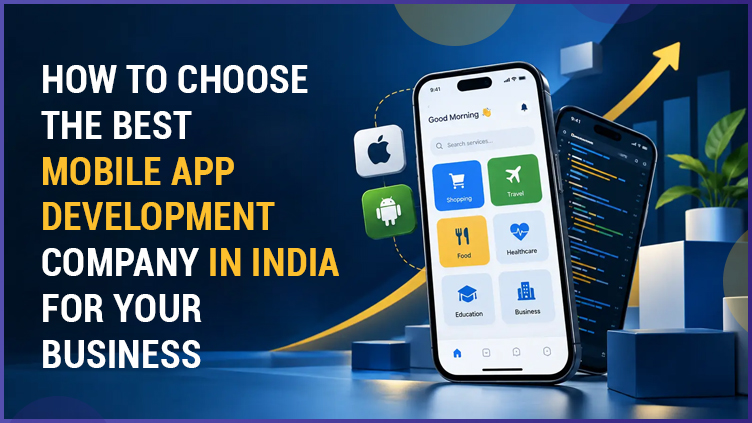
How to Choose the Best Mobile App Development Company in India for Your Business in 2026
You have an app idea, a rough budget and a shortlist of companies that all claim to be the best mobile app development company in India. Their websites look similar. Their proposals use the same words. And their quotes for what seems like the same app can be very different.
This is where many businesses make an expensive decision. They choose the lowest quote or the company with the most impressive portfolio, only to discover later that the app is delayed, full of bugs or difficult to update without the original development team.
Choosing a mobile app development company in India is not difficult because good options are rare. It is difficult because there are so many providers, and the differences that matter are not always visible on their websites.
The right development partner should understand your business requirements, recommend suitable technology, communicate clearly and support your app after launch.
This guide explains what to check, which questions to ask and which warning signs to avoid before choosing an app development partner in 2026.
Start With Your Own Requirements, Not the Company List
Many poor hiring decisions start before the first conversation with a developer. If you cannot clearly explain what you need, each company may make different assumptions. You could end up comparing proposals for completely different apps.
Before contacting a mobile app development agency, prepare a short project brief covering these points:
- The business problem: What should the app improve? For example, more repeat orders, fewer customer support calls or faster field reporting.
- Your target users: Will customers, employees, delivery partners or several user groups use the app?
- Essential features: List the features required for the first version. Keep additional ideas in a separate list for future development.
- Platforms: Do you need Android, iOS or both? Your decision should depend on your target audience and business requirements.
- Budget and timeline: Share a realistic budget range and expected launch period. This helps development companies recommend a suitable scope.
- Post-launch requirements: Decide whether you have an internal technical team or will need ongoing development and maintenance support.
For example, imagine a diagnostic laboratory business in Pune that wants an app for test bookings, home sample collection, report downloads and payments.
The business might also want family profiles, loyalty points and a chatbot. However, these features may not be necessary for the first release. Test booking, report access and payment functionality could be enough to launch and understand how customers use the app.
Starting with a clear project brief makes conversations more productive and helps you compare proposals on the same basis.
Know the Types of App Development Partners in India
Not every development provider offers the same services or works in the same way. Understanding the different types of partners can help you find one that matches your project.
|
Partner type |
Best suited for |
Main strengths |
What to consider |
|
Freelancer |
Small fixes, prototypes and simple apps |
Direct communication and potentially lower costs |
Limited backup and resources for design, testing and backend work |
|
Small app studio |
Startups and SMEs with a focused first version |
Flexible working and personal attention |
May have limited capacity for larger projects |
|
Mid-sized development company |
Custom apps with backend systems and integrations |
Access to developers, designers, QA and project managers |
Check the actual team and its experience |
|
Large IT services firm |
Enterprise applications and complex systems |
Structured processes and larger delivery teams |
May involve higher costs and less attention for smaller projects |
|
Dedicated development team |
Businesses with internal product managers or technical leaders |
Greater control over priorities and development resources |
Your business needs to manage the work closely |
If you already have a CTO or product manager and need additional developers, hiring a dedicated team may be suitable.
If you want a partner to manage the process from planning and design through development and launch, a full-service mobile application development company may be a better fit.
You can also read our guide on staff augmentation vs outsourcing to understand the differences between these working models.
What to Look For in a Mobile App Development Company in India
Once you understand the type of partner you need, evaluate each company against the following criteria.
1. Check the Company's Portfolio and Relevant Experience
A long list of client logos does not automatically make a company the right choice. What matters is whether it has experience building applications with requirements similar to yours.
Ask the company to share two or three live applications that you can download from Google Play or the Apple App Store.
Review the applications and check:
- When was the app last updated?
- What do users say about its performance, speed and usability?
- Does it have recurring complaints about crashes or login issues?
- Which parts did the development company actually handle?
- Does the app include features similar to the ones you need?
For example, if your project requires online payments, real-time tracking or offline functionality, ask for examples that demonstrate experience with those features.
A relevant portfolio gives you a better understanding of the company's practical development experience than a collection of attractive screenshots.
2. Evaluate the Platform and Technology Options
The right technology depends on your app's features, performance requirements, target users and future plans.
A reliable development company should explain the available options instead of recommending the same framework for every project.
|
Development approach |
What it means |
Suitable for |
Considerations |
|
Native Android (Kotlin, Java) |
Built specifically for Android devices |
Android-focused apps and projects requiring platform-specific features |
A separate development approach is needed for iOS |
|
Native iOS (Swift) |
Built specifically for Apple devices |
iPhone and iPad applications requiring deep Apple integration |
A separate Android application is needed |
|
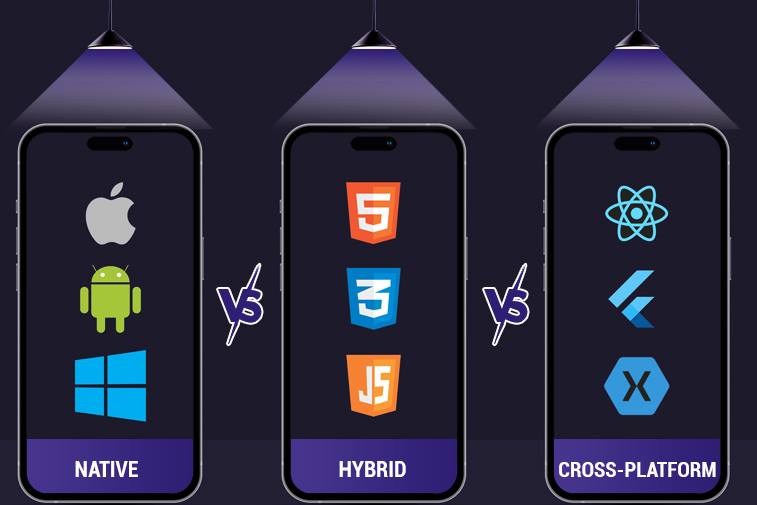
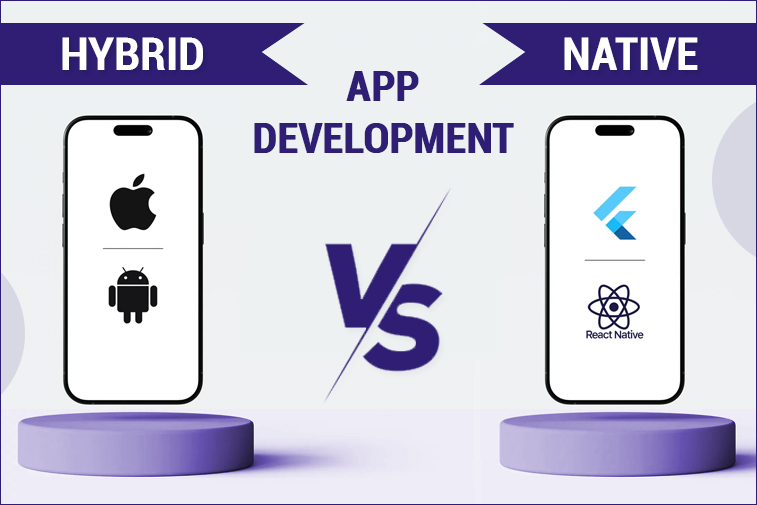
Cross-platform (Flutter, React Native) |
Uses a shared codebase to develop for multiple platforms |
Many business applications that need Android and iOS support |
Some advanced device features may require additional native development |
Native development can be suitable when an application requires specific device capabilities or platform-level performance.
Cross-platform development can help businesses maintain applications for multiple platforms through a shared codebase. However, it does not automatically make every project cheaper or faster. The actual result depends on the features, integrations and technical requirements.
If you are comparing an Android app development company with an iOS app development company, ask whether the provider can support both platforms as your business grows.
You can learn more in our guides on Hybrid vs Native vs Cross-Platform App Development and how to choose the right technology stack for your app.
3. Check Experience With India-Specific Requirements
Developing an app for Indian users involves practical requirements that a development team should understand.
Depending on your business and target audience, these may include:
- UPI and local payment gateways: The app should handle successful, failed and pending transactions properly.
- Phone number and OTP login: Many Indian applications use mobile number verification as part of the login process.
- Regional language support: Consider Hindi, Marathi, Tamil, Bengali and other languages based on your customer base.
- Affordable Android devices: The application should work reliably across different screen sizes, device capabilities and Android versions.
- Low network connectivity: Apps used by field teams may need offline functionality and reliable data synchronisation.
Consider a distributor in rural Maharashtra who wants a sales application for field representatives taking orders in areas with limited network coverage.
If the app cannot save orders when the internet connection drops, employees may lose important information. A development team with experience in offline functionality can help plan how the application should store and synchronise data.
If your business operates outside India, ask whether the company has experience with your target market's payment methods, languages and privacy requirements.
4. Review the UI/UX Design Process
A mobile application should be easy to understand and use. Even an application with strong technical features can struggle if users find its navigation confusing.
A professional development process should include:
- Understanding user requirements and journeys.
- Creating wireframes to plan the main screens.
- Preparing UI designs and interactive prototypes.
- Reviewing the designs with your team.
- Making agreed changes before development begins.
Ask how the company handles design revisions and whether it tests important user journeys before development.
For example, an online shopping app should make it easy for users to find products, add items to their cart, complete payments and track orders.
Reviewing these steps during the design stage can help identify usability problems before they become expensive development changes.
5. Understand the Company's Testing and Quality Assurance Process
An app may work perfectly on a developer's phone but still have problems on other devices.
Android applications, in particular, need to be tested across different manufacturers, screen sizes, operating system versions and device capabilities.
Before hiring, ask:
- Does the company have dedicated QA testers?
- Are applications tested on real devices as well as emulators?
- When does testing begin during development?
- How are bugs recorded, prioritised and fixed?
- Does the testing process cover performance, security and usability?
Testing should be part of the development process from the beginning, not something left until the week before launch.
6. Evaluate Communication and Project Management
Technical skills are important, but communication also affects whether your project stays organised and moves forward as expected.
Look for a development partner that provides:
- A clear point of contact who understands your business and technical requirements.
- Regular progress updates and demonstrations of working features.
- A shared project management tool to track tasks and issues.
- A clear process for handling changes in requirements.
- Written updates about project milestones and delivery expectations.
Many development teams use short working cycles called sprints. At the end of a sprint, the team reviews completed work and discusses what comes next.
Ask whether you will be able to review the app regularly instead of waiting until the entire project is complete.
If you are hiring a company in India from another country, also discuss working-hour overlap, meeting schedules and communication channels.
Our guide on Agile vs Waterfall software development explains two common approaches to managing development projects.
7. Ask About Security and Data Protection
If your application collects names, phone numbers, addresses, location details, health information or payment-related data, security needs to be considered from the planning stage.
Ask the development company:
- How will user data be protected on the device and server?
- What security measures will be used for data transmission?
- Where will application data be stored?
- How will user consent and privacy notices be handled?
- Who will have access to production data?
- How will security issues be identified and addressed?
India's Digital Personal Data Protection Act, 2023 and the DPDP Rules, 2025 are being implemented in phases. Several key provisions are scheduled to take effect from 13 May 2027, while some provisions have earlier commencement dates.
If your application collects personal data, plan for appropriate privacy notices, consent management and data security during development. The exact requirements depend on your application and how it processes personal data.
A development company can help implement technical requirements, but it should not replace qualified legal advice. Consult a data protection professional about your business's specific obligations.
8. Check Post-Launch Support and Maintenance
Launching an app is not the end of the development process. Applications need regular maintenance to remain compatible, secure and useful.
Apple and Google regularly update their operating systems and app store requirements. Without maintenance, an application may develop compatibility, security or performance issues.
Before signing a contract, ask what support the company provides after launch.
Check whether the agreement covers:
- Bug fixes after release.
- Operating system compatibility updates.
- Performance monitoring.
- Security updates.
- Small changes and feature improvements.
- Emergency support and response times.
- Monthly or annual maintenance costs.
Also clarify how long the initial support period lasts and which types of changes will be charged separately.
A clear maintenance agreement helps you understand the long-term cost of managing your application.
9. Confirm Ownership of Source Code, Accounts and Data
Ownership is one of the most important points to discuss before starting an app development project.
Your contract should clearly explain which project-specific source code, designs and deliverables transfer to your business, when ownership transfers and which third-party, open-source or pre-existing components remain subject to separate licence terms.
You should also confirm that:
- Your business has access to the source code repository.
- Project documentation and design files are included in the agreed handover.
- The app is published under your company's Google Play and Apple Developer accounts, where appropriate.
- Server, domain and third-party service accounts are under your business's control.
- You receive the agreed access credentials and handover documents.
For a business application, it is generally better for the client company to own its developer accounts and grant the development partner the access it needs.
This keeps publishing and account administration under the business's control.
Do not rely on verbal promises. Make sure the ownership, access and handover arrangements are included in the written agreement.
Understanding Mobile App Development Cost in India
How much does it cost to develop a mobile app in India?
The answer depends on what you want to build. A basic application with a few screens and simple functionality requires a different level of effort from a complex platform with payments, real-time tracking, integrations and an administrative dashboard.
Instead of relying on a fixed price list, understand the factors that affect your development budget.
Factors That Affect Mobile App Development Cost
|
Cost factor |
Why it affects the price |
|
Number and complexity of features |
Basic login and product listings require less work than real-time tracking, chat, video or AI features |
|
Number of platforms |
Separate native Android and iOS applications may require more development work |
|
Backend and admin panel |
Servers, databases and management dashboards add to the project scope |
|
Third-party integrations |
Payment gateways, SMS services, maps, ERP and CRM connections require additional work |
|
UI/UX design |
Custom layouts, animations and detailed user journeys affect design and development effort |
|
Security requirements |
Applications handling sensitive data may need additional security measures and reviews |
|
Team experience |
Developer experience and team structure influence project costs and delivery |
Common Mobile App Development Pricing Models
Development companies generally offer different pricing models depending on the project.
|
Pricing model |
How it works |
Suitable for |
|
Fixed price |
One agreed price for a clearly defined scope |
Projects with stable requirements |
|
Time and material |
Payment based on the actual time spent by the team |
Projects where requirements may change |
|
Dedicated team |
A monthly fee for a team assigned to your product |
Long-term development and ongoing improvements |
Some companies combine these models. For example, a business may begin with a fixed-price discovery phase and then move to time-and-material development.
Ask each company to explain its pricing model, payment schedule and what is included in the proposal.
Hidden Costs to Consider Before Hiring
The development quote is not always the complete cost of owning an application.
Remember to consider:
- App store developer account fees.
- Cloud hosting and server expenses.
- SMS and OTP charges.
- Payment gateway fees.
- Maps and other third-party services.
- Ongoing maintenance and updates.
- Marketing and user acquisition.
- Applicable taxes, including GST where relevant.
Ask whether the proposal includes these expenses or whether they will be billed separately.
Practical tip: Do not compare development companies only by their total quotes. Ask for a feature-wise or phase-wise breakdown. If one proposal is significantly cheaper, check whether it excludes important work such as backend development, testing, documentation or post-launch support.
10 Questions to Ask Before You Hire Mobile App Developers
A company's website and sales presentation can tell you what it offers. Direct questions can help you understand how its team actually works.
Before making a decision, ask:
1. What would you remove from our feature list for version one, and why?
A good development partner should help you prioritise essential features instead of agreeing to every request. This can help control the initial scope and budget.
2. What is the biggest risk you see in this project?
A team that understands your requirements should be able to identify possible technical, operational or delivery risks.
3. Can you tell us about a project that did not go as planned?
Ask what happened and what the team learned. Honest answers can reveal how the company handles problems.
4. What happens if a developer leaves the project?
Ask about code reviews, documentation, team backup and knowledge transfer.
5. Can we see a sample project report or sprint demonstration?
This helps you understand how progress will be shared and how often you will review completed work.
6. What do you need from our side every week?
Development projects also depend on timely feedback, content, approvals and business decisions from the client.
7. How do you handle an App Store or Google Play rejection?
Ask who will investigate the reason, make the required changes and manage the resubmission process.
8. If we stop working together, what exactly will we receive?
The handover should cover the agreed source code, design files, documentation, repositories and account access.
9. Who will support us after launch?
Find out whether the same development team will continue working on the app or whether a separate maintenance team will take over.
10. What is included in your post-launch support, and what costs extra?
Ask how long bug fixes are covered, what counts as a new feature and how urgent issues are handled. Get the answers in writing.
Pay attention to how the company responds. A reliable development partner should also ask questions about your business model, users, priorities and expected outcomes.
For more guidance, read our article on questions to ask a software development company before hiring.
Warning Signs to Watch for in Development Proposals
Some problems can be identified before development even begins. Pay attention to how a company presents its proposal, explains its process and responds to your questions.
|
Warning sign |
What you should ask |
|
The company agrees to every feature and deadline without discussion |
What would you change in our plan if you were managing this budget? |
|
The quote is much lower than other proposals |
Which features, services or support items are excluded? |
|
The proposal does not identify the project team |
Who will design, develop and test the application? |
|
Every portfolio app looks like the same template |
Can you show an application built around a client's specific requirements? |
|
The company wants to publish the app under its own developer account |
Can our business own the accounts and provide your team with access? |
|
All communication goes through a salesperson |
Can we speak with the project manager or technical lead? |
|
Most of the payment is requested before work begins |
Can payments be connected to agreed project milestones? |
A professional company should be able to explain its proposal, team structure, delivery process and payment terms clearly.
You can also read our guide on software outsourcing mistakes to avoid.
Test Your Top Choice With a Paid Discovery Phase
A sales call and a proposal can only tell you so much. Before committing your entire development budget, consider starting with a small, paid discovery phase.
This gives both sides an opportunity to understand the project in more detail before full development begins.
A useful discovery phase should produce:
|
Deliverable |
Why it matters |
|
Written feature list |
Separates essential first-release features from future improvements |
|
User flows and wireframes |
Shows how users will move through the application |
|
Technical plan |
Explains platform choices, architecture and integrations |
|
Phase-wise estimate |
Gives a clearer view of expected development effort and cost |
|
Risk and assumptions list |
Identifies possible problems before development begins |
Discovery also helps you evaluate the development team. You can observe how quickly it responds, how clearly it explains technical decisions and whether it challenges ideas that may not suit your requirements.
Make sure the discovery agreement explains who owns the resulting documents and designs, and what you can take away if you decide not to continue with the company.
Common Mistakes Businesses Make When Choosing an App Development Partner
Even a capable development company cannot guarantee a successful project if the requirements and working arrangements are unclear.
Avoid these common mistakes:
- Trying to build everything in version one: Too many features can increase the initial scope and delay the launch. Prioritise what users need first.
- Choosing a company only because of its low quote: A cheaper proposal may exclude important work or require expensive changes later.
- Skipping project planning: Requirements, user journeys and technical decisions should be discussed before development starts.
- Not assigning an internal project owner: Someone from your business should be responsible for feedback, approvals and decisions.
- Ignoring maintenance: Plan for updates, bug fixes and technical support after the application goes live.
- Forgetting about marketing: An app needs a plan to reach its target users. Development and user acquisition are two different activities.
If you are planning the launch of a new application, our guide to app marketing strategy can help you understand the next steps.
How Sapphire Technologies Can Help With Your Mobile App Development
Choosing the right development partner means finding a team that understands both your technical requirements and your business goals.
Sapphire Technologies provides mobile app development services in India for businesses looking to build applications for Android and iOS.
Our mobile app development offering covers:
- Android app development: Applications developed for Android devices using suitable technologies based on project requirements.
- iOS app development: Applications for iPhone and iPad using Apple's development technologies.
- Cross-platform app development: Solutions using frameworks such as Flutter when a shared codebase is suitable for the project.
- Custom app development: Applications planned around your business processes, users and required features.
- App consulting and technology planning: Support with selecting an appropriate technology stack and application architecture.
- Testing and quality assurance: Testing across relevant devices and operating systems during the development process.
The development process begins with understanding your requirements and planning the application. This is followed by wireframing, UI design, development, testing and delivery.
Sapphire Technologies also provides software development, AI and machine learning development, web development and digital marketing services. This can help businesses coordinate related technology and marketing requirements with a single service provider where the project scope calls for it.
Before choosing a development partner, review its work, discuss your requirements and understand the proposed delivery process.
Explore our mobile app development services in India to learn more about our approach.
You can also review our recent work and client reviews before getting in touch.
Frequently Asked Questions
1. Why do quotes from different app development companies in India vary so much?
Quotes vary because companies may assume different project scopes, technologies, team structures and testing requirements. One proposal might include backend development, an admin panel and post-launch support, while another may cover only the app's front-end screens.
To compare proposals fairly, share the same written requirements with every company and ask for a feature-wise cost breakdown.
2. Can I build a good mobile app on a small budget?
Yes. The key is to keep the first version focused. Identify the features that are essential to your business and consider developing additional functionality in later phases.
Cross-platform development may also be worth considering if you need Android and iOS support. However, the right approach depends on your application's features and technical requirements.
3. Is it safe to share my app idea with a development company?
You can ask the company to sign a non-disclosure agreement (NDA) before sharing confidential project information. You should also use a written agreement that explains confidentiality, ownership of deliverables and how your business data will be handled.
Choose a development partner you trust and avoid sharing sensitive access credentials unnecessarily.
4. Is a paid discovery phase worth the extra cost?
For many custom app projects, a discovery phase can be useful. It helps define requirements, prepare wireframes, review technical options and identify risks before full development begins.
It can also help you understand how the development team communicates and approaches problems.
5. Can I switch to a different app development company in the middle of a project?
Yes, but the process can be difficult if access and ownership arrangements were not agreed in advance.
You may need the source code, repository access, design files, project documentation, server credentials and developer account access. A new team will also need time to review the existing application before continuing development.
6. What does India's DPDP Act mean for my mobile app?
If your app processes personal data of individuals in India, you should consider the requirements of the Digital Personal Data Protection Act, 2023 and the applicable rules.
These include requirements relating to personal data processing, notices, consent and data protection, depending on the circumstances. The law is being implemented in phases, so businesses should plan for the applicable requirements during development and seek qualified legal advice.
7. Can an Indian app development company build applications for international businesses?
Yes. Indian development companies can work with businesses in international markets. Before hiring, check whether the provider understands your target market, payment methods, languages, privacy requirements and working-hour expectations.
Ask for relevant experience with projects serving customers in your target region.
8. Do I need a separate agency to market my app after launch?
Not necessarily. Some development companies also offer digital marketing services, which can help businesses coordinate application development and launch activities.
Whether you use one provider or separate agencies, make sure your marketing goals, app analytics and user acquisition plans are clearly defined.
Ready to Discuss Your Mobile App Idea?
Choosing a mobile app development company is an important business decision. The right partner should understand your requirements, recommend suitable technology, communicate clearly and help you plan beyond the initial launch.
If you are comparing development companies, start with a conversation about your business goals, target users, budget and essential features.
Sapphire Technologies can help you explore the right development approach for your project.
Contact Sapphire Technologies to discuss your requirements, or explore our mobile app development company in India page to learn more about our services.